
The Workplace Deaths That Make The News - And The Thousands That Don't
Explore HSE's 2025/26 workplace safety statistics, covering fatal injuries, occupational lung disease, HAVS, work-related stress, and the legal duty to document and control these risks.
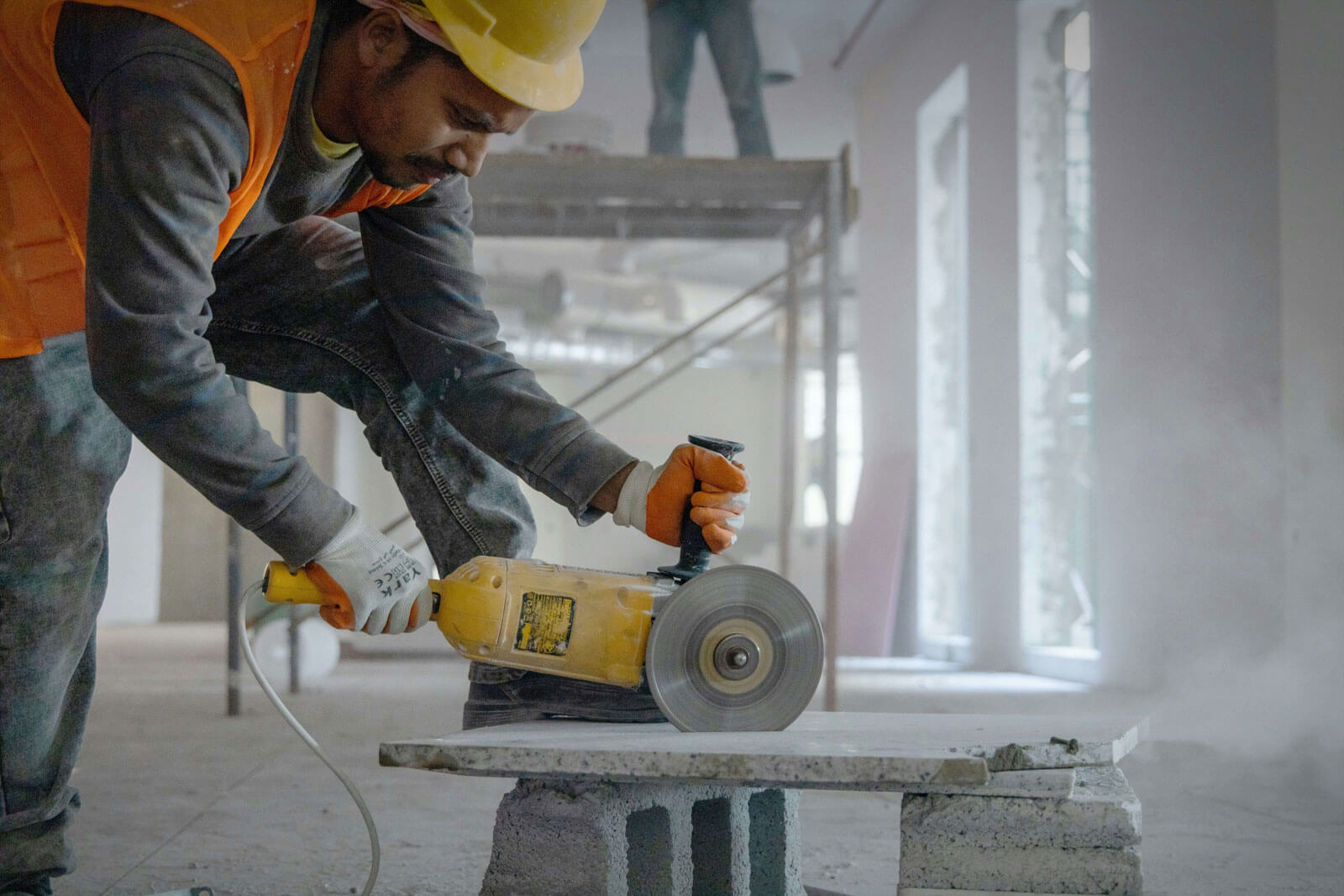
Every summer, the Health and Safety Executive publishes its annual statistics on fatal injuries at work. This year's figures, covering 2025/26, show 126 workers killed in work-related accidents in Great Britain. Behind each number is a family, a colleague, a community that will never be the same.
But those 126 deaths - as shocking as they are - tell only part of the story. Alongside every acute fatality, there are thousands of workers living with conditions that developed slowly, invisibly, and often without any single moment of incident. Lung disease from years of dust exposure, nerve damage from vibrating tools, and psychological harm from chronic workplace stress. These are the deaths and disabilities that rarely make the headlines, but they occur in numbers that are devastating.
The Visible Toll: Fatal Injuries in 2025/26
The HSE's latest fatal injury statistics show construction as the deadliest sector for workers, with 25 deaths - the highest of any industry. Agriculture, forestry and fishing followed with 22, and manufacturing with 18. Transportation and storage recorded 15 fatalities.
The leading cause of death was falls from height, responsible for 31 worker fatalities. Being struck by a moving vehicle accounted for 24, and being struck by a moving object for 21. A further 104 members of the public were also killed in work-related accidents during the same period.
These are sudden, acute events - a fall, a collision, a moment of catastrophic failure. They are visible, reportable, and investigated. They generate headlines.
What generates far fewer headlines is what kills far more people.
The Hidden Toll: 11,000 Lung Disease Deaths a Year from Past Exposure
Alongside the fatalities report, the HSE also publishes data on work-related ill health and occupational disease. The figure buried in that report deserves far more attention than it typically receives:
An estimated 11,000 people die every year from lung disease linked to past exposures at work.
Not 11,000 over a decade. Every year. That is roughly 87 times the number of workers killed in acute accidents in 2025/26.
These deaths come from conditions that took years to develop. By the time a worker feels the effects, the damage is already done. The exposures that caused it may have happened on a job site 20 or 30 years ago.
The breakdown of those 11,000 annual deaths is stark:
- 35% — Chronic Obstructive Pulmonary Disease (COPD)
- 23% — Non-asbestos related lung cancer
- 20% — Asbestos-related lung cancer
- 20% — Mesothelioma
- 3% — Other occupational lung diseases
Construction, manufacturing, utilities, and infrastructure workers are disproportionately represented in these figures. The very industries that built modern Britain are still paying a price for how they once operated and, unfortunately, in many cases, for how they still operate today.
Dust: The Hazard That Hides in Plain Sight
The word "dust" can make the risk sound trivial. It isn't. Fine respirable particles, whether from silica, wood, asbestos, coal, or general construction debris, can cause irreversible damage to lung tissue with repeated exposure over time.
Silicosis, caused by inhaling silica dust from cutting, grinding or drilling stone, concrete and similar materials, is entirely preventable, yet it continues to kill. Asbestosis and mesothelioma, caused by asbestos fibres that remain in lung tissue for life once inhaled, are responsible for a significant proportion of those 11,000 annual deaths. Many victims were exposed to asbestos decades before the symptoms appeared.
The HSE is clear on the latency of these conditions: current deaths reflect past working conditions. The exposure happening on sites today will determine the death statistics in 2040, 2050, and beyond.
HAVS, Mental Health, and the Wider Landscape of Chronic Occupational Harm
Dust-related lung disease is the most lethal expression of a broader problem: chronic harm caused by long-term workplace exposure that goes unmanaged until it is too late. Two other conditions illustrate the same pattern.
Hand-Arm Vibration Syndrome (HAVS) is caused by prolonged use of vibrating tools, such as grinders, breakers, compactors, chainsaws. It causes progressive damage to the nerves and blood vessels in the hands and arms: numbness, tingling, loss of grip strength, and in severe cases, permanent damage that ends careers. An estimated two million workers in the UK are regularly exposed to levels of hand-arm vibration that put them at risk. Like dust-related disease, HAVS develops slowly, often goes undetected until significant damage has occurred, and requires systematic exposure monitoring and health surveillance to manage effectively.
Mental health represents the third (but in volume terms, the largest) category of chronic workplace harm. In 2024/25, an estimated 964,000 workers suffered from work-related stress, depression or anxiety. That single condition accounted for 52% of all work-related ill health and 62% of all working days lost due to work-related illness. A total of 22.1 million days, at an average of nearly 23 days per case.
The rate has been rising. In each of the last three reporting years, prevalence has exceeded pre-pandemic levels. The main causes workers cite are workload pressures (e.g. tight deadlines, too much responsibility, excessive demands) alongside a lack of managerial support. These are not unusual or unforeseeable conditions; they are largely a product of how work is organised and how people are managed.
The industries most affected by work-related stress, depression and anxiety include public administration, health and social work, and education. It is a cross-sector problem. In high-risk industries such as construction, utilities and infrastructure, the combination of physical hazard, regulatory pressure, shift work, and job insecurity creates its own distinctive set of stressors. Mental ill health in these sectors often goes unrecognised or unreported, compounding the harm.
Like dust exposure and vibration, the psychological harm accumulating in workplaces today will manifest in ill health, disability, and lost productivity for years to come. Again, just like those physical hazards, it is largely preventable with the right management approach.
The Financial Cost
The financial case for prevention is as compelling as the moral one. According to HSE's own cost modelling, each new case of work-related ill health costs an employer an average of £4,800. This rises to £10,000 for cases involving seven or more days' absence. A workplace fatality carries an average employer cost of £111,000. These are direct costs only, covering recruitment, retraining, lost productivity, insurance, and administration. They do not include the human cost to the individual, which the HSE values at an additional £12,800 per ill health case, or the government's share of healthcare and benefits expenditure.
Across Great Britain as a whole, employers bear an estimated £4.3 billion of the total £22.9 billion annual cost of workplace injury and ill health.
Mental health adds a further, often underestimated layer to that burden. Deloitte's research puts the cost of poor mental health to UK employers at £51 billion a year — driven primarily by presenteeism (£28 billion), staff turnover (£22 billion), and absenteeism (£6 billion).
Average sickness absence has now risen to 9.4 days per employee per year, the highest level in over a decade, with stress, depression and anxiety the leading cause of long-term absence. Critically, Deloitte also found that employers receive £4.70 back for every £1 invested in mental health support. The cost of inaction consistently outweighs the cost of intervention.
Prevention Is Possible - But Only With the Right Controls in Place
The 11,000 annual deaths from occupational lung disease represent decades of failure: failures in dust control, failures in health surveillance, failures in record-keeping, and failures in contractor oversight. The 964,000 workers currently suffering from work-related stress, depression or anxiety represent a parallel failure playing out in real time.
But the conditions causing today's harm are preventable.
Under COSHH regulations, employers have a clear legal duty to assess the risk from hazardous substances (including dust), implement the hierarchy of controls (elimination, substitution, engineering controls, and PPE as a last resort), and carry out health surveillance where required. The duty to ensure subcontractors and supply chain workers are equally protected falls on principal contractors.
For vibration exposure, the Control of Vibration at Work Regulations 2005 place similarly clear obligations on employers: assess exposure levels, reduce them to the lowest reasonably practicable level, and provide health surveillance for workers at risk.
For mental health, the legal framework is grounded in the Management of Health, Safety and Welfare at Work Regulations 1999, which require employers to assess and manage risks to psychological as well as physical health. The HSE's own guidance makes clear that stress is a health and safety issue and should be treated as such. It cannot be managed informally or left to individuals to absorb. Regular risk assessments, defined management standards, and access to occupational health support are all part of what a compliant and responsible approach looks like.
The challenge for many businesses is not knowing what they should do. It is demonstrating that they have done it. When an HSE inspector arrives on site, or when a worker makes a claim years after the exposure occurred, the question is always the same: where is your evidence?
Documentation Is Not Bureaucracy: It Is Protection
Whether it is dust monitoring records, health surveillance outcomes, RPE face-fit test certificates, vibration exposure logs, stress risk assessments, or records of management interventions, documentation is what transforms good intentions into defensible compliance.
A digital approach makes this significantly more manageable. Capturing data at the point of activity, maintaining audit-ready records across a workforce that includes contractors and subcontractors, and ensuring that evidence of controls is retained over time. These are the foundations of genuine compliance rather than paper compliance.
The HSE's annual statistics are a reminder that workplace safety is measured not just in the accidents that happen today, but in the exposures and pressures that are occurring today and will manifest as illness, disability, and death decades from now.
126 deaths reported under RIDDOR. 11,000 deaths from occupational lung disease. 964,000 workers suffering from work-related stress, depression or anxiety. The full scale of harm in Britain's workplaces is vastly larger than any single headline figure suggests: slow, cumulative, and largely invisible until it is too late.
The time to act is not when symptoms appear. It is now.
For more detail on managing dust exposure and the legal framework around lung disease prevention, read our article: From Risk to Control: Protecting Workers from Dust Exposure and Lung Disease
For more detail on managing HAVS exposure and the legal framework around HAVS prevention, read our article: HAVS Management & Risk Assessments Guide | Ctrl Hub
For more detail on managing mental health and the legal framework around mental health at work, read our article: Beyond Blue Monday: Mental Health Management in High-Risk Industries
Sources: HSE Work-related fatal injuries in Great Britain, 2025/26 | HSE Work-related ill health and occupational disease in Great Britain | HSE Work-related stress, depression or anxiety statistics in Great Britain, 2025 | Understanding mental health in the built environment, CIOB Report 2025 | Appraisal values or 'unit costs' - HSE | Poor mental health costs UK employers £51 billion a year for employees | Deloitte UK
● find out more
One piece of software.
Infinite peace of mind.
Take Ctrl.
Talk to our team
show your support

